The billion dollar gap for GLP-1 brands
Brand leaders must join anti-counterfeit teams to tackle the $171B non-adherence crisis and protect GLP-1 margins.



Jenni Krohn
Market Development Manager, Avery Dennison
June 10, 2026
A colleague said something to me recently that I have not been able to stop thinking about.
She was telling me about her friends who are taking weight loss medication they found through their social feed.
I have spent over a decade working on pharmaceutical supply chain standards and authentication technology. I understand, at a technical level, what the risks are when a patient takes medication of unknown origin. This is a close-to-home signal of how completely the psychology of risk has shifted for this rapidly growing category of medicines.
Have GLP-1 receptor agonists stopped being perceived as prescription drugs? Are they lifestyle products? That distinction matters enormously, because the way people assess risk for a lifestyle product is fundamentally different from the way they assess risk for medicine. I did some fact checking.
How a drug class becomes a consumer category
GLP-1 medications accounted for 35.7% of all prescription TV advertising spend in the first half of 2025 in USA. At this year's Super Bowl, multiple GLP-1 brands each spent upwards of $10 million on a single commercial. US patients spent $40 billion on these medications in 2024, a figure projected to triple by 2030. Celebrity endorsements have positioned taking these drugs as a personal choice, a wellness decision, something people recommend to friends.
Health providers are increasingly promoting access to GLP-1 medications through social platforms, even as platform policies restrict weight loss product sales. Enforcement remains inconsistent, and a quick search reveals plenty of willing sellers.
This is how the fastest-growing pharmaceutical category in the world is entering the mainstream consumer consciousness. And it is doing so in a way that has systematically dismantled the psychological guardrails that patients normally apply to prescription medicine.
The luxury goods instinct
When people buy expensive goods online, they have learned to authenticate. Serial numbers, subtle differences in packaging, and some platforms offer verification services. They do this because enough counterfeiting cases have made the risk feel real and personal. The instinct to check has been trained into the behaviour by experience.
That instinct has not yet been trained into the behaviour of patients buying weight loss medication online. Not because the risk is smaller, but because the mass patient safety event that would shift default behaviour has not yet occurred.
The absence of a catastrophic, widely reported event has been read by many patients as evidence that the risk is being managed. The truth is that the risk is not yet visible at scale.
New research has found that 60% of patients across four markets worry their medication might not be genuine, and yet 94% report confidence that their medication is safe. These numbers appear contradictory. They describe a specific psychological state: patients who know, abstractly, that a risk exists, but who have no practical mechanism to check, and so default to trust. If there is no way to verify, the only functional option is to assume it is fine. That is rational behaviour in an environment where verification tools do not exist.
83% of patients said they would value a way to verify authenticity. What they are describing is exactly the same instinct that makes people authenticate a luxury purchase. Confirmation that the thing they paid for, and are about to put into their body, is the thing they were sold.
A probability that compounds
There is a dimension to this problem that gets little attention: for a patient on a chronic GLP-1 regimen, this is not a single risk decision. It is a cumulative probability that plays out over years.
A patient on a weekly injectable who stays on it for five years will handle approximately 260 doses. If they supplement through an unverified channel even occasionally (as a growing number are, primarily for cost reasons) the probability that at least one of those doses is counterfeit is no longer theoretical, it is arithmetic. Just multiply the counterfeit rate in the channel by the number of exposures.
What will be the trigger? The oral pill format is now entering the market. A pill bottle with colour-coded variants containing 30 tablets that are significantly easier to counterfeit than a precision auto-injector. A patient on a daily oral GLP-1 for the rest of their life will handle thousands of doses. The pharmaceutical companies developing these products understand this. The question is whether the patient experience will be designed around it.
People who buy luxury goods online have developed verification behaviour because the market gave them the tools and the awareness to do so. Weight loss medication is heading toward the same reckoning. The difference is that the stakes are not a counterfeit handbag. They are unknown substances disguised as medicines people take every day.
Will pharma give patients the tools to verify their medicine? Read what patients think.
Three Avery Dennison Healthcare experts explore what the data means for pharmaceutical brand strategy, supply chain design, and patient engagement.

Brand leaders must join anti-counterfeit teams to tackle the $171B non-adherence crisis and protect GLP-1 margins.

Hospitals have strict safety checks, but home patients are left alone. It's time to extend protection to the doorstep.

Mobile-first GLP-1 patients expect to use their smartphones to verify medication safety instantly.

Pharma teams must bridge the trust gap by making invisible supply chain security visible to anxious patients at home.

Discover how pharma production lines are using RFID embedded into primary packaging to enable safety, efficiency and compliance from the start of the supply chain.
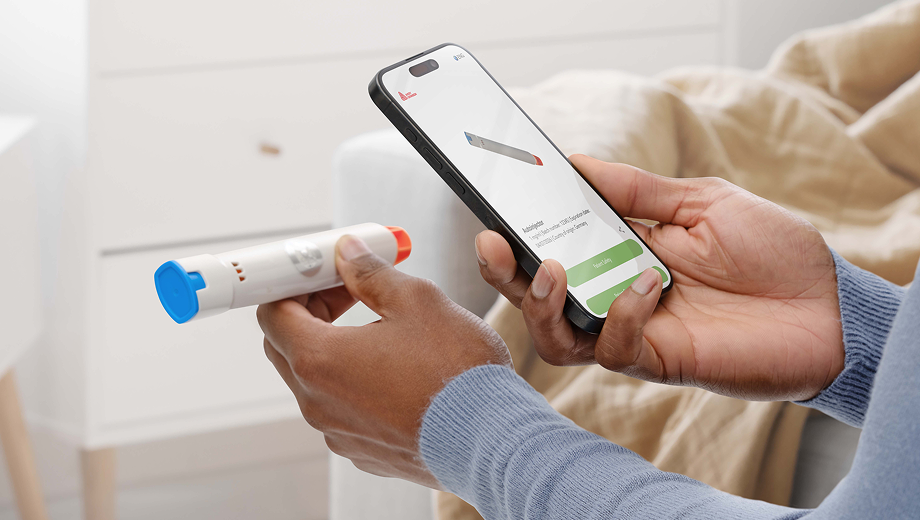
Smart packaging is helping patients and care providers to authenticate medicines and manage therapy adherence.
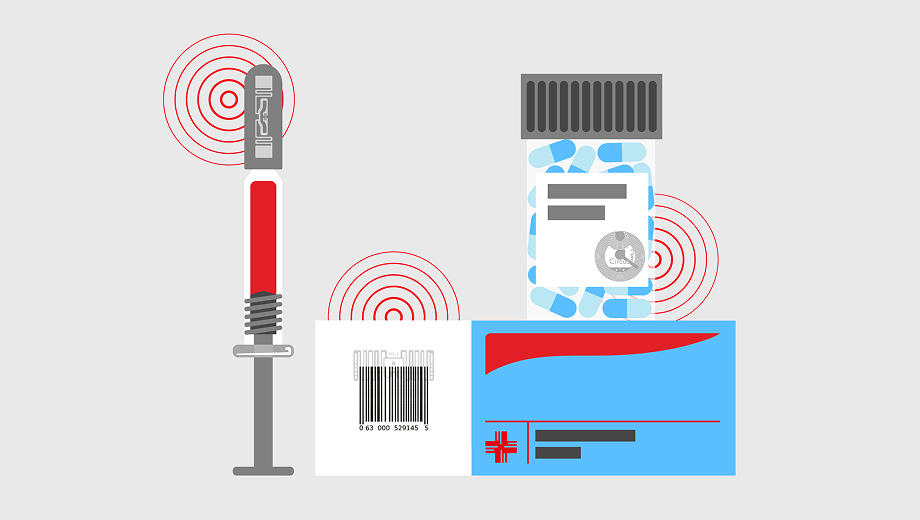
Here you can find answers to some questions on how digital identity and intelligent labeling improves safety, trust, and efficiency in healthcare.
Connect with our team for a private briefing focused on the evidence and its strategic implications for your leadership team.