The food industry is going through deep, seismic changes driven by the evolution of new technology in both manufacturing and our daily routines. Through the Internet of Things, nearly everything in our lives as consumers is evolving toward less friction and more automation. From cashier-less stores to ordering via smart speaker, time-strapped consumers are gravitating toward shopping that’s less of a chore. In addition, customers want to know what’s in their food, and where exactly it came from, all the way back to the source. Supply chains are now dinner-party conversation topics and the race to deliver convenience is on, one where smarter supply chains must provide transparency and accountability above all.
Enhancing sustainability and customer experience
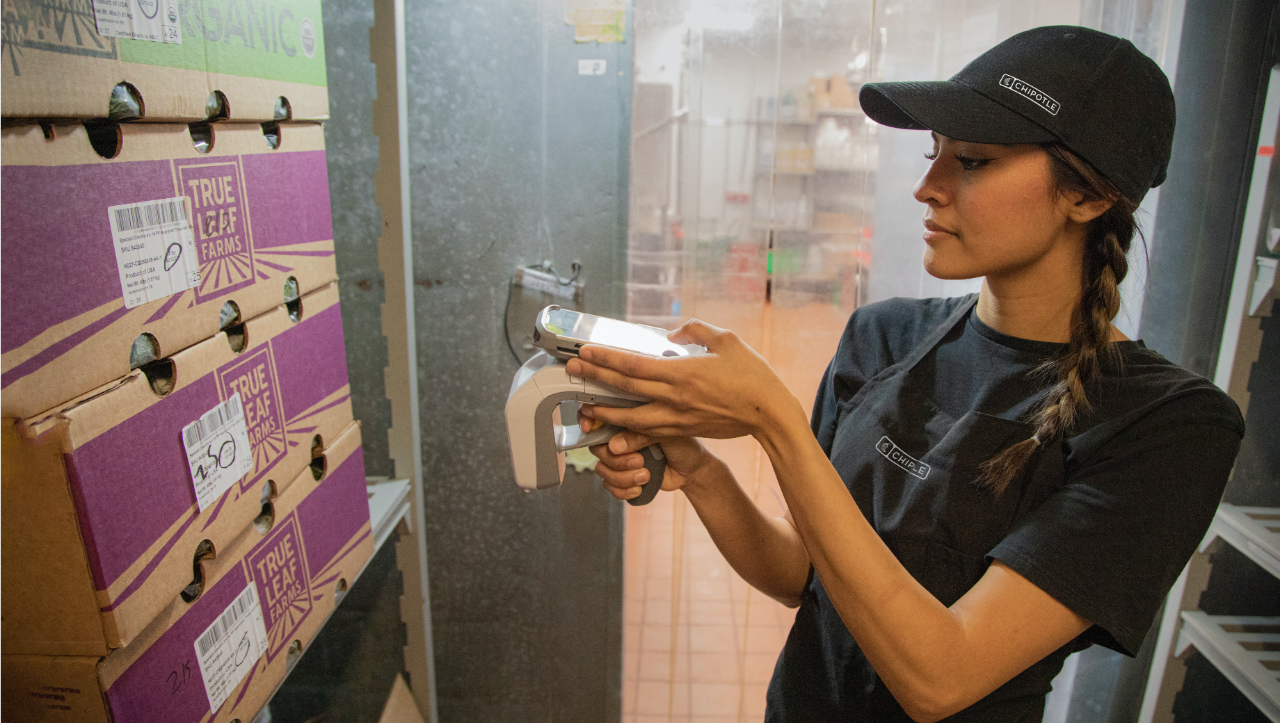
Digital ID solutions such as RFID dramatically improve inventory management and enable you to see exactly what’s come in, how much product you have, and when it leaves — with up to 99 percent accuracy. That allows you to automate, to maintain quality and shelf life without compromise, to locate lost products, to redirect what needs to be redirected, and to withdraw only what needs withdrawing.
Launching our new AD IdentiFresh™ Inlay Series
The AD IdentiFresh™ Inlay Series marks a breakthrough in RFID, featuring inlays that leverage advanced antenna technology to deliver item-level tagging and enabling high-accuracy read rates on difficult and densely stacked items. This series of inlays are offered in a compact form factor designed to fit easily within existing label formats. This allows food operators to implement an RFID solution that integrates seamlessly into current labeling equipment, minimizing operational disruption. Avery Dennison solutions support in-store and supplier tagging, offering flexibility and high-volume scalability. This advancement in RFID will allow businesses to safely enhance inventory visibility, reduce waste, and establish a fully connected fresh food supply chain in Bakery, Deli, Produce and Protein Departments.
The future of food is here
By adding a unique identifier and online connectivity to every item in any inventory, RFID-enabled labels let grocers, restaurants, convenience stores and food suppliers dramatically improve inventory management, efficiency, traceability, sustainability, and customer satisfaction. We design our solutions to meet customers’ most pressing challenges, and continually innovate to make sure we stay a step ahead of the industry’s rapidly changing needs.
- Inventory management: By providing atomic levels of visibility into your inventory and supply chain, RFID technology enables you to flexibly adapt to the market and better satisfy consumer demands. In particular, RFID solutions can create more advanced models for fulfillment and replenishment. This means replenishing products sooner, and reducing customer dissatisfaction and sales lost from out-of-stocks.
- Traceability: More consumers than ever expect transparency in their food supply. At the same time, product recalls are a major business risk, with millions of dollars’ worth of product at stake. Our solutions enable you to verify a food item’s journey across the entire supply chain, from its source to its final destination, and pinpoint any trouble spots along the way, minimizing risk and cost.
- Frictionless shopping: In the swirling sea of frictionless and touchless technologies, RFID tagging emerges as the best choice for grocery retailers of any size. It not only offers an easier, more enjoyable experience for your customers — it also provides powerful advantages for your business.
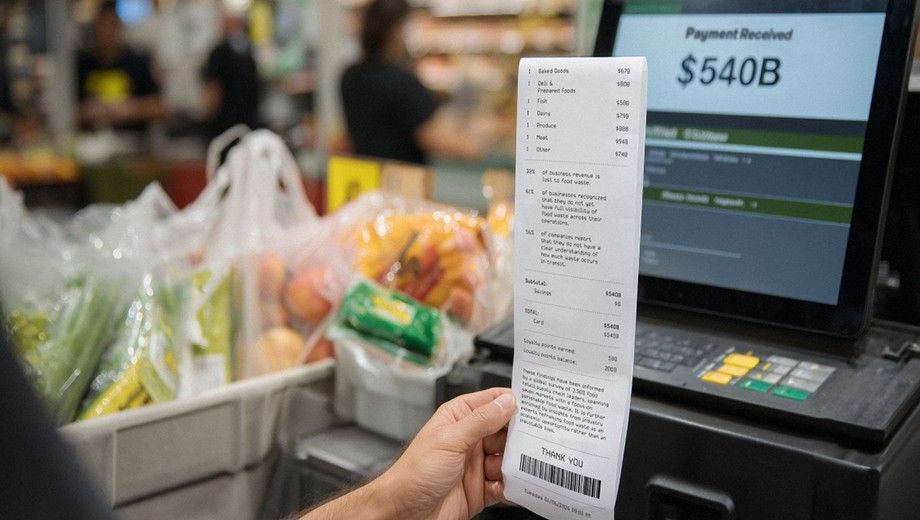
- Sustainability: Avoiding overproduction and reducing food waste are growing demands from customers across the globe. RFID tagging can help you reduce waste by as much as 20 percent by aligning your inventory with variable demand across different regions. Data provided by RFID also gives you far greater visibility into expiry, enabling you to discount or otherwise promote soon-to-expire items. You can also monitor temperature-sensitive products during their journey through the supply chain, to help you avoid waste through spoilage.